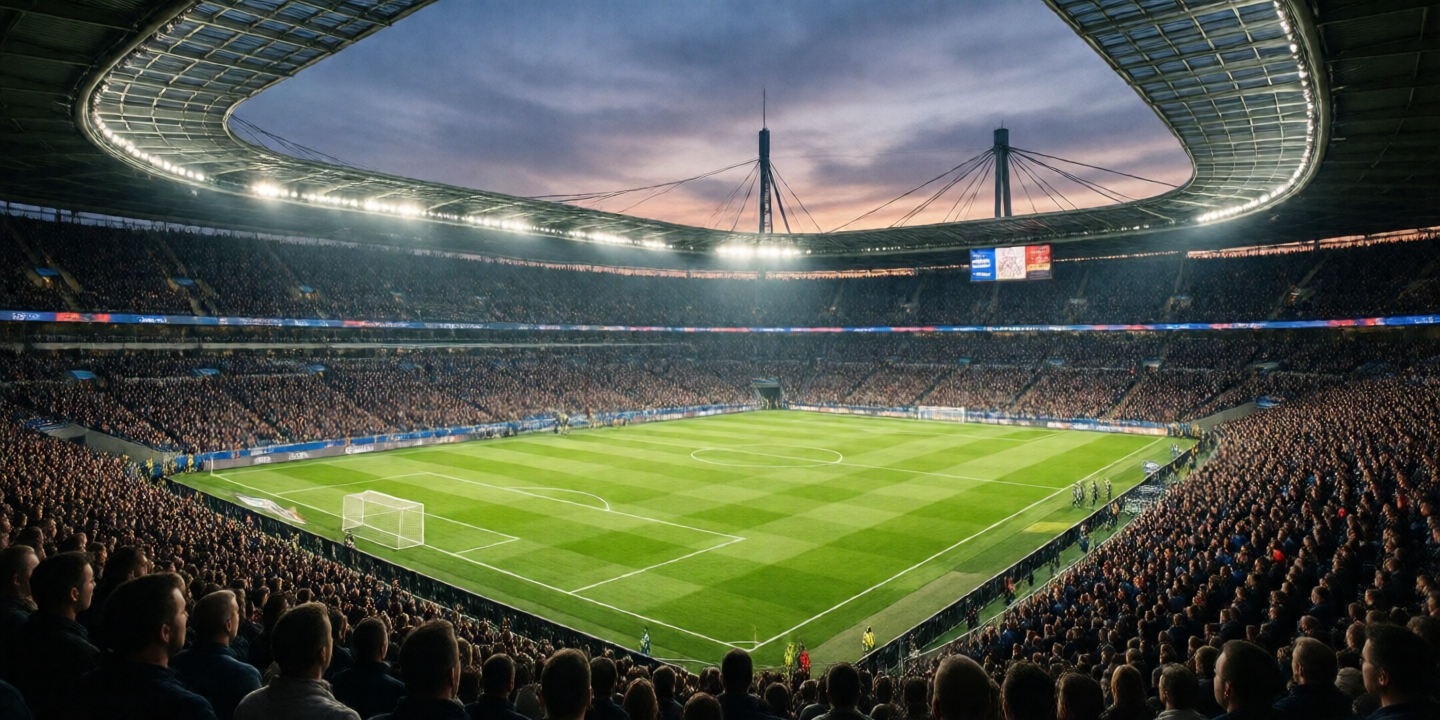
Why Kansas City Turns Travel Into Match-Day Strategy
The 2026 FIFA World Cup will make Kansas City a host city in the United States, with matches staged at Arrowhead Stadium and fan activity extending across the wider Kansas City region. Kansas City wil...
Why Kansas City Turns Travel Into Match-Day Strategy
The 2026 FIFA World Cup will make Kansas City a host city in the United States, with matches staged at Arrowhead Stadium and fan activity extending across the wider Kansas City region. Kansas City will welcome international supporters during the expanded 48-team tournament, hosted by the United States, Canada, and Mexico from June 11 to July 19, 2026. The city’s official plans emphasize dedicated motorcoach connections, Kansas City International Airport, regional destinations, stadium access, and FIFA Fan Festival programming. The venue sits in the Kansas City Chiefs’ sports complex, while the city’s two-state geography affects accommodation, public transport, and travel planning. Football Compass will follow the tournament through match predictions, team tactics, player statistics, and daily 2026 World Cup coverage. The practical takeaway is simple: reserve accommodation and map your stadium transfer before finalizing your match schedule.

Kansas City’s World Cup opportunity is larger than a series of football matches. It is a coordinated visitor operation involving stadium security, airport arrivals, public transport, hospitality, local businesses, fan gatherings, and supporters moving between Missouri and Kansas. That complexity creates understandable myths, especially for visitors who know the city primarily through the Kansas City Chiefs, barbecue, jazz, or Major League Soccer rather than international football.
I’ll be honest with you: I have learned through expensive mistakes that a major tournament punishes casual planning. A ticket may get you into Arrowhead Stadium, but it does not solve the questions of where you will sleep, how long the stadium transfer will take, which route is operating on your match day, or whether your preferred Fan Festival location has capacity restrictions. The following guide separates what Kansas City is genuinely prepared to offer from assumptions that could leave you stranded, rushed, or paying far more than necessary.
Want a broader tournament briefing before planning your city itinerary?
Myth 1: Kansas City is only a football stop — debunked
Kansas City is not merely a stadium destination because the 2026 World Cup program connects Arrowhead Stadium with airport services, regional transport, cultural attractions, and FIFA Fan Festival activity. Visitors should plan for a citywide experience rather than a two-hour stadium visit, particularly when thousands of supporters gather in central districts and surrounding neighborhoods.
Kansas City’s official host-city messaging presents the region as the “Soccer Capital of America®,” a positioning supported by Sporting Kansas City, Children’s Mercy Park, local youth football, and a long-established sports culture. The 2026 World Cup adds an international layer to that identity. Supporters may arrive through Kansas City International Airport, stay on either side of the Missouri–Kansas border, attend a match at Arrowhead Stadium, and spend non-match hours exploring the Country Club Plaza, Power & Light District, Crossroads Arts District, or local museums.
The key issue is distribution. Fan activity will not necessarily be concentrated beside the stadium, and the stadium’s location in the Truman Sports Complex is not equivalent to staying downtown. Kansas City’s official visitor materials specifically promote direct motorcoach links to and from Kansas City International Airport, Arrowhead Stadium on match days, and regional destinations connected with the FIFA Fan Festival. That means the transport plan is part of the event itself, not an afterthought.
For context, FIFA’s official 2026 World Cup overview confirms that the tournament will use 16 host cities across North America. Kansas City’s role therefore has to be understood alongside host-city operations in Dallas, Atlanta, Miami, Toronto, Mexico City, and Los Angeles rather than in isolation.
What makes Kansas City different from a conventional stadium trip?
The city’s greatest strength is also its logistical challenge: visitors can experience food, music, sport, and neighborhoods across a broad metropolitan area, but walking between those experiences is rarely realistic. A supporter staying near downtown Kansas City may need a scheduled transfer to Arrowhead Stadium, while someone in Overland Park or Olathe may face an entirely different connection pattern.
My most useful practical observation is this: a route that looks short on a map can become inconvenient when event traffic, security screening, parking controls, and post-match crowd movement are added. During a high-demand match, “distance” is a poor substitute for a verified transport timetable. Check the host-city guidance, identify the official pickup zone, and allow a substantial buffer after the final whistle instead of assuming a rideshare vehicle will meet you at the stadium gate.
To compare Kansas City’s attractions with the wider tournament schedule, see our 2026 World Cup host-city planning guide.
Myth 2: Arrowhead Stadium access will work like an ordinary Chiefs game — partially true
Arrowhead Stadium remains the central match venue in Kansas City, but World Cup operations can differ from a normal Kansas City Chiefs NFL event through ticketing rules, security procedures, transport corridors, commercial restrictions, and international visitor demand. Familiarity with the stadium helps, yet supporters should follow FIFA and host-city instructions rather than rely entirely on previous Chiefs game-day habits.
The venue’s identity matters. Arrowhead Stadium, home of the Kansas City Chiefs, is part of the Truman Sports Complex and has a reputation for intense crowd noise. However, the 2026 World Cup will be managed under FIFA competition standards, with match-day procedures designed for a multinational audience. Stadium entry may involve controlled gates, prohibited-item rules, digital ticket requirements, and security checks that change according to the fixture and operational assessment.
A normal NFL game also has a predictable local audience. A FIFA World Cup match may attract supporters from several countries, neutral fans, media teams, volunteers, commercial partners, and visitors who have never attended an event in Kansas City. That changes the pressure on airport transfers, hotels, roads, food service, and post-match departures.
The Kansas City 2026 host-city website emphasizes “direct” transport connections and match-day mobility. Treat that language as operational guidance, not decorative tourism copy. When official booking windows open, compare the published departure time, boarding location, return arrangement, and cancellation conditions. Do not purchase a separate attraction or dinner reservation immediately after a match unless your transfer plan allows for crowd delays.
How should first-time visitors plan the stadium day?
First-time visitors should separate four stages: arrival in Kansas City, movement to the stadium, entry through security, and departure after the match. This is more reliable than treating the day as one continuous outing, because each stage has different risks and time requirements.
A sensible stadium-day checklist includes:
- Confirm the match ticket, entry gate, and digital-wallet access before leaving your accommodation.
- Photograph or save the official transport instructions, including the return pickup location.
- Carry only permitted essentials; large bags can cause delays or be refused.
- Eat and use restroom facilities before entering the final transport queue.
- Agree on a meeting point with companions in case mobile service becomes congested.
- Keep the next morning flexible if your match ends late or transport demand is heavy.
The most overlooked detail is the return journey. Before the match begins, identify where official buses, rideshare vehicles, taxis, and walking routes are separated. After the final whistle, supporters often focus on celebrating and discover too late that the pickup zone is several minutes from the exit. A five-minute planning conversation before kickoff can prevent an hour of confusion in a dense crowd.
Get the practical match-day details in one place before bookings become expensive.

Myth 3: Kansas City’s FIFA Fan Festival is just a screen outside the stadium — flat-out false
The FIFA Fan Festival in Kansas City is intended as a major public celebration where supporters can watch matches, share national cultures, enjoy entertainment, and experience local food away from Arrowhead Stadium. It is not simply a waiting area for people without tickets; its value lies in creating an accessible tournament atmosphere across the city.
Kansas City’s host-city materials describe the Fan Festival as a place for “good matches, good food, good entertainment and good people.” That positioning is important because a World Cup city needs public viewing infrastructure for residents, traveling supporters without stadium tickets, families, and fans attending matches in another host city. A successful festival can distribute foot traffic and give the tournament a civic identity beyond the venue perimeter.
Expect programming to evolve as 2026 approaches. Schedules may include live match broadcasts, music, cultural showcases, food vendors, sponsor activations, and football-related activities. Exact entry requirements, operating hours, capacity controls, and location details should be checked through official Kansas City and FIFA channels rather than assumed from early promotional material.
The Fan Festival may also be the smarter choice for certain matchups. If a supporter is traveling with children, lacks a stadium ticket, or wants to watch a different match from the one taking place at Arrowhead Stadium, a central public viewing environment can provide better access and less transport stress. Nevertheless, public events can reach capacity, and “free” does not mean “effortless.” Arrive early for high-profile fixtures and keep an alternative viewing plan.
What should families and international supporters expect?
Families and international supporters should expect a celebratory environment with multiple languages, national colors, food choices, entertainment, and variable crowd density. The experience will depend on the match schedule, weather, attendance levels, accessibility facilities, and any published security restrictions.
Kansas City in June and July can be warm, so hydration, sun protection, comfortable footwear, and a weather backup matter. Supporters should also consider the distance between a Fan Festival site and their accommodation, especially if they are carrying flags, shopping bags, or children’s equipment. The National Weather Service provides official forecasts and heat-safety information, but conditions can change quickly during summer storms.
A useful evidence-based distinction is between a stadium ticket and a festival visit. The ticket controls access to a specific match and venue, while the festival experience may depend on public capacity, program timing, and operational instructions. Do not schedule both with zero buffer when they are located in different parts of the metropolitan area.
For supporters traveling with children or older relatives, our accessible World Cup travel checklist can help organize transport, rest stops, and essential documents.
What actually works for the 2026 World Cup in Kansas City?
The most reliable Kansas City strategy combines official information, early accommodation research, a verified match-day transfer, and flexible expectations about post-match timing. Supporters who treat the city as a regional transport network rather than a compact walking district will make better decisions and avoid many predictable costs.
Start with the fixture and venue, then work outward. Once you know which match you want to attend, review accommodation in downtown Kansas City, the Country Club Plaza, Kansas City International Airport corridor, Overland Park, and other connected districts. Compare total journey time rather than room price alone. A cheaper room that requires an uncertain late-night transfer may cost more in transport, stress, and missed activities than a moderately priced room near a dependable route.
Second, build a source hierarchy. FIFA controls tournament-level information; Kansas City 2026 and local authorities provide host-city operations; airlines, hotels, and transport providers control their own booking terms. Social media can identify useful local observations, but it should not replace official information about tickets, security, closures, or transport.
Third, separate confirmed details from forecasts. Tournament plans can change because of security assessments, construction, weather, broadcast needs, or crowd-management decisions. A responsible guide should identify what is announced, what is expected, and what still requires confirmation. This is especially important for Fan Festival hours, exact shuttle booking procedures, parking restrictions, and venue-entry rules.
A practical planning table can look like this:
- Confirmed: host city, tournament dates, Arrowhead Stadium role, official city program, FIFA governance.
- Likely but changeable: high hotel demand, road congestion, increased rideshare prices, large public-viewing crowds.
- Must verify later: exact kickoff times, shuttle reservations, gate assignments, prohibited items, Fan Festival capacity rules.
- Personal decision: accommodation district, budget, mobility requirements, family needs, and tolerance for post-match waiting.
The operational edge most casual visitors miss is cancellation flexibility. Booking a non-refundable room before the match schedule, transport timetable, and entry requirements are fully clear can create an avoidable financial loss. If the price difference is reasonable, a refundable reservation is often worth more than a small headline discount.
Why is transport more important than proximity?
Transport matters more than proximity because Arrowhead Stadium is outside the downtown core, and event-day traffic can make a short-looking route unpredictable. Official motorcoach services, airport links, regional connections, and designated pickup zones may provide more dependable access than an improvised taxi or rideshare journey.
Kansas City’s two-state footprint complicates simple accommodation decisions. A hotel in Kansas City, Missouri, may be close to downtown attractions but still require a planned stadium transfer. A property in Kansas or near Overland Park may offer space and amenities but create a longer match-day journey. Kansas City International Airport, downtown, the stadium complex, and suburban districts should be treated as separate nodes in your itinerary.
Here is the planning method I recommend:
- Mark your accommodation, stadium, Fan Festival site, and airport on one map.
- Identify the official transport option for every match-related journey.
- Add at least one backup route that does not depend on a single rideshare provider.
- Check whether the return route requires advance booking or a specific pickup zone.
- Keep the first and last day of the trip lighter than the middle days.
- Confirm accessibility, luggage, child, and payment requirements directly with providers.
The Federal Aviation Administration and local authorities may issue travel or road updates during the tournament period. For general aviation information, consult FAA.gov; for local visitor planning, use official Kansas City channels rather than an outdated third-party map.
Want a more disciplined approach to match selection and team analysis?

What should fans ignore when planning Kansas City?
Fans should ignore unverified promises, obsolete maps, guaranteed travel times, unofficial ticket claims, and the assumption that every part of the city will operate normally during the 2026 World Cup. Major tournaments produce useful local advice, but they also produce misinformation that spreads quickly when demand is high.
Be particularly cautious with five claims:
- “The stadium is downtown.” Arrowhead Stadium is in the Truman Sports Complex, not in the central business district.
- “Rideshare will always be available.” Demand surges, traffic controls, and designated pickup locations can change the experience.
- “A World Cup ticket includes transport.” Never assume this unless the official ticket or transport terms explicitly say so.
- “Any hotel within Kansas City is equally convenient.” The metropolitan area covers multiple districts and two states.
- “Early promotional information is final.” Match times, festival schedules, and operational instructions can be updated.
I would also ignore anyone presenting betting predictions as certainty. Football Compass covers match predictions, tactics, player statistics, and tournament developments, but a prediction is analysis, not a guarantee. In regulated markets, wagering rules, age requirements, identity checks, and responsible-gambling protections vary by jurisdiction. Visitors should never treat a forecast, promotional offer, or social-media tip as a substitute for independent judgment, and they should only participate where lawful.
The U.S. National Council on Problem Gambling provides responsible-gambling resources, while FIFA’s official platforms remain the correct source for tournament announcements. A careful supporter can enjoy the competitive side of the World Cup without allowing financial risk to distort travel decisions.
What is the contrarian lesson from Kansas City?
The contrarian lesson is that the best Kansas City World Cup experience may involve fewer activities, not more. Trying to combine a stadium match, a Fan Festival, a restaurant reservation, and multiple sightseeing stops on the same day creates more points of failure than meaningful value.
A high-quality itinerary should protect recovery time. Schedule one main tournament activity per day when possible, especially for evening matches. Reserve restaurants near your accommodation or along a verified route rather than across the metropolitan area. Carry a portable charger, maintain offline copies of tickets and addresses, and agree on a fallback meeting point before crowds become dense.
My own hardest-earned lesson is that flexibility has measurable value. If a booking saves $40 but cannot be changed, while a refundable option costs $65 more, the extra $25 can protect an entire day when a match time, flight, or transport arrangement changes. That is not glamorous advice, but tournaments reward people who protect optionality.
Use our World Cup match-day budgeting guide to compare accommodation, food, local transport, and contingency costs before committing.

Frequently Asked Questions
Q: What is the 2026 World Cup in Kansas City?
A: The 2026 World Cup in Kansas City is the tournament’s host-city program centered on matches at Arrowhead Stadium and supporter events across the region. Kansas City is one of 16 host cities in the United States, Canada, and Mexico for the expanded 48-team FIFA World Cup. The program also includes transport planning, public celebrations, hospitality, and the FIFA Fan Festival. Match-specific dates, kickoff times, and final operational instructions should be confirmed through FIFA and Kansas City 2026 channels.
Q: Where will 2026 World Cup matches be played in Kansas City?
A: Kansas City matches will be played at Arrowhead Stadium in the Truman Sports Complex. The stadium is associated with the Kansas City Chiefs and is located outside the downtown core, so visitors should not plan on walking from most central hotels. Match-day transportation may include official motorcoach services and designated regional connections. Confirm the assigned gate, transport pickup point, parking rules, and arrival window after official instructions are released.
Q: How do I get to Arrowhead Stadium during the World Cup?
A: Use the official match-day transport information first, then compare it with a verified backup route. Kansas City’s host-city planning includes motorcoach connections involving Kansas City International Airport, Arrowhead Stadium, the FIFA Fan Festival, and regional destinations. Rideshare availability may be affected by surge pricing, traffic restrictions, and designated pickup zones. Save your return instructions before entering the stadium because post-match crowds can make mobile searches slow or unreliable.
Q: What is the difference between the FIFA Fan Festival and a World Cup match?
A: A World Cup match is a ticketed fixture inside Arrowhead Stadium, while the FIFA Fan Festival is a public supporter experience featuring live match viewing, entertainment, food, and cultural programming. The festival is designed for fans who lack stadium tickets as well as visitors seeking a broader community atmosphere. Capacity, operating hours, entry requirements, and program details may change. Check official Kansas City 2026 announcements before traveling to the festival.
Q: How much should I budget for a Kansas City World Cup trip?
A: There is no single fixed cost, but you should budget separately for accommodation, tournament tickets, flights, local transport, food, and contingency spending. Hotel prices can rise sharply around popular fixtures, while airport transfers and rideshare fares may increase during peak demand. A refundable hotel rate, official transport reservation, and emergency reserve can reduce financial exposure. Compare the complete trip cost rather than choosing accommodation solely by nightly price.
Q: What should I do if my Kansas City World Cup transport fails?
A: Move to the designated information point or official pickup area and contact the transport provider before ordering an independent vehicle. Keep screenshots of your booking reference, pickup location, ticket, accommodation address, and emergency contacts because crowded networks can make websites difficult to load. Do not follow unofficial route sellers or accept unverified ticket offers. If you have mobility, medical, or child-safety concerns, tell event staff immediately so they can direct you to appropriate assistance.
Q: Is Kansas City a good base for following the 2026 World Cup?
A: Kansas City is a strong base for supporters who value a major host-city atmosphere, Arrowhead Stadium access, food culture, and organized fan programming. Its limitation is that the metropolitan area is spread across Missouri and Kansas, making transport planning more important than in a compact city center. Kansas City International Airport, downtown districts, suburban hotels, and the stadium should be evaluated as separate locations. It is an especially practical choice when your selected fixtures and accommodation are planned together.
Kansas City can deliver a memorable 2026 World Cup experience, but the strongest plans will be deliberate rather than improvised. Confirm the venue, respect the distance between districts, use official transport information, allow time for crowds, and keep reservations flexible where possible. Football Compass will continue tracking fixtures, team tactics, player statistics, predictions, and tournament developments as verified details emerge.
Ready to plan your Kansas City tournament experience with greater confidence?